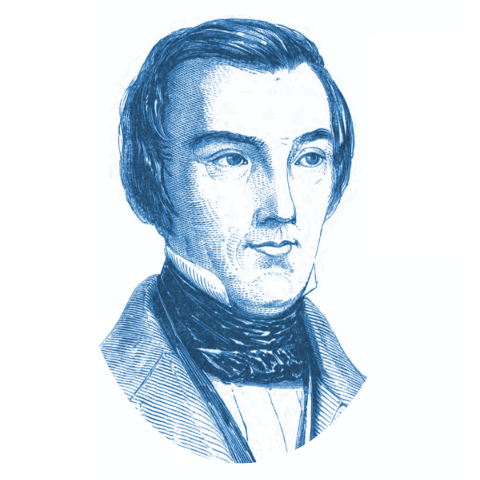
Why “Bastiat” Academy?
Who Was Frédéric Bastiat?
Frédéric Bastiat (1801–1850) was a French economist, statesman, and writer. He has been described as “the most brilliant economic journalist who ever lived.”
Bastiat lived as a gentleman farmer in southern France, but his true vocation was to explain economic truth in clear, vivid language. He wrote for ordinary citizens, not just professors or politicians, and he used stories, parables, and humor to show how ideas work in real life.
His most influential works include:
- The Law – a passionate defense of natural rights, private property, and limited government.
- What is Seen and What is Not Seen – an essay showing how good thinking must look beyond immediate effects to the hidden, longer-term consequences of policy.
- Economic Sophisms – short essays exposing the fallacies behind protectionism, socialism, and other popular errors.
Across these works, Bastiat consistently warned against:
- Protectionism – using government power to favor some producers at the expense of consumers.
- Communism and forced redistribution – systems that erase individual responsibility and property, and which ultimately undermine human dignity and initiative.
- Legal plunder – when laws are twisted to take from some and give to others under a moral disguise.
Why a School Named After Him?
We chose the name Bastiat Academy because Bastiat united several qualities we want our students to imitate:
- Clarity of thought – he could explain complex ideas simply, without being simplistic.
- Moral seriousness – he believed in justice, responsibility, and the worth of every person.
- Love of freedom – he understood that genuine progress comes from free and responsible individuals, not from centralized planning.
- Intellectual courage – he stood against fashionable errors in his day, even when they were popular or politically powerful.
At Bastiat Academy, we want students to:
- See “what is not seen” – to think beyond headlines, slogans, and first impressions.
- Understand both economic principles and moral principles that make a free and humane society possible.
- Grow into men and women who can build, create, and serve in ways that respect human dignity and freedom.
In this sense, Bastiat is not just a historical figure for us; he is a mentor across time in clear thinking, honest argument, and love of liberty.